After Hours Lead Capture: Why Waiting Costs Leads
Opening answer
They wait, and waiting is how a lead stops being a lead. An after-hours call, form, or email does not sit in a polite queue until 9 a.m. It sits in voicemail, an unread inbox, or a web form you will "get to tomorrow," while the person who reached out keeps looking. Research published in 2011 found that firms that tried to contact a web-generated lead within an hour of the query were nearly seven times as likely to qualify it (a real conversation with a decision maker) as firms that waited even one more hour, and more than 60 times as likely as firms that waited 24 hours or longer [1]. After hours lead capture is not a nicety. It is whether that inquiry still exists when a human finally picks it up.
Buyers have evenings. Most shops do not.
The United States is full of small firms and short counters. In 2023 there were 5.58 million U.S. firms with at least one employee and fewer than 500, the Small Business Administration's usual cutoff for "small" [2]. A shop that size rarely staffs a night desk. The people those shops sell to, though, are not sitting idle until the Open sign flips.
The Bureau of Labor Statistics' 2025 American Time Use Survey is blunt about when paid work happens [3]. Eighty-one percent of employed people worked on an average weekday, compared with 30 percent on an average weekend day. On the weekdays they worked, full-time employed people averaged 8.5 hours on the job [3]. A 2026 National Bureau of Economic Research working paper tracking U.S. work timing from 1973 through 2023 found the opposite of a 24/7 labor market: a long decline in evening and night paid work, and a steady rise in work concentrated in the 8 a.m. to 4 p.m. window [4]. If the people you hire are increasingly on the clock in daylight, the people you sell to are increasingly free after that clock stops.
They are not offline when they get home. A Pew Research Center survey [5] fielded in 2023 found that 95 percent of U.S. adults use the internet, 90 percent have a smartphone, and 41 percent say they are online almost constantly [5]. Google's 2016 dayparting analysis (using 2015 U.S. search data) showed more searches on phones than on computers and tablets for 15 of the 24 hours in a typical weekday. Mobile took the lead again in the afternoon commute and held it all night, and it led on weekends as well [6]. Device mix has shifted since 2015. The pattern has not: people research and reach out in the hours when a small firm is dark. That after-hours window is the overlap of "I finally have a minute" and "nobody is there to take it."
Lost-pipeline math, not a slogan
You do not need a vendor's after-hours percentage to see the damage. Pull 30 days of call logs, form timestamps, and inbound email. Count how many arrived after you locked the door or on a Saturday. Then count how many of those you contacted inside an hour versus the next business morning.
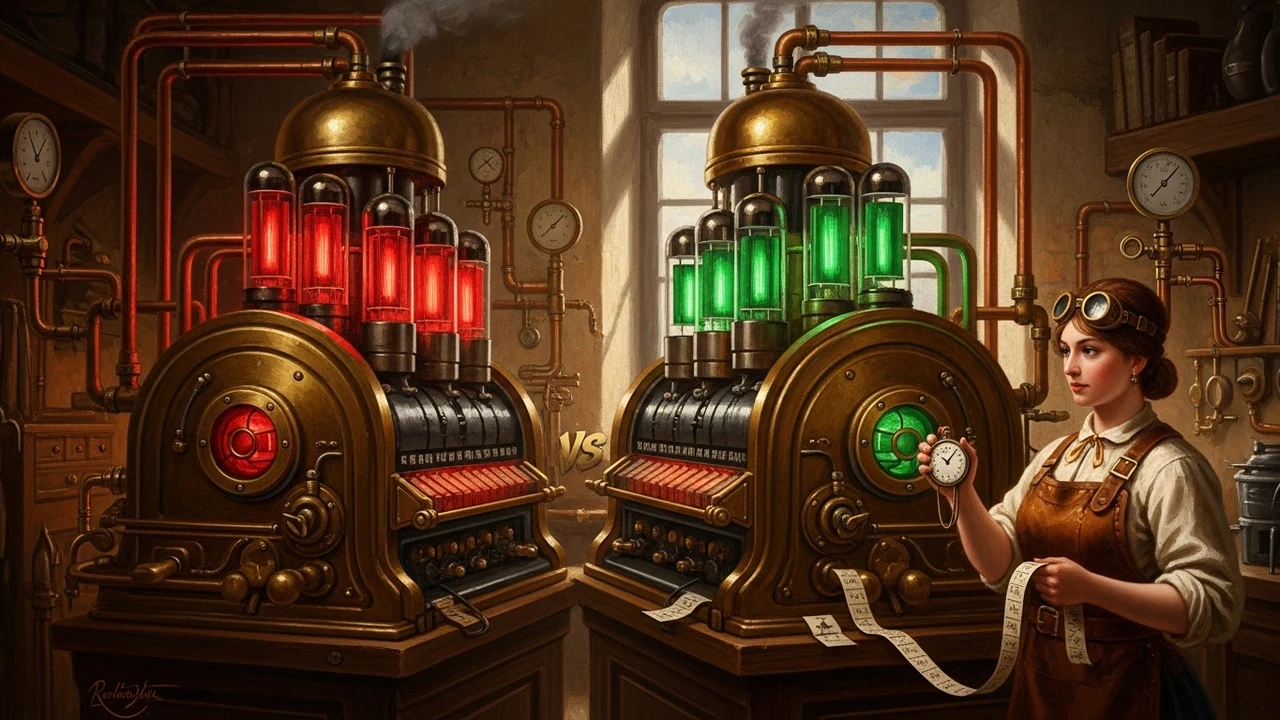
The 2011 Harvard Business Review piece is old, and we will treat it that way. It is still the cleanest public measurement of what delay does to a web lead. The authors audited 2,241 U.S. companies with a test inquiry. Thirty-seven percent responded within an hour. Sixteen percent responded between one and 24 hours. Twenty-four percent took more than a day. Twenty-three percent never responded at all. Among companies that did respond within 30 days, the average wait was 42 hours [1]. In a companion analysis of 1.25 million sales leads across 29 consumer and 13 business companies, trying to contact a lead within an hour was nearly seven times as likely to produce a qualified conversation as trying an hour later, and more than 60 times as likely as waiting a day or more [1].
Apply that curve to a Tuesday at 7:40 p.m. Your callback at 9:15 a.m. Wednesday is not "first thing." It is a 13-hour delay, well past the one-hour window those researchers treated as useful and most of the way toward the 24-hour cliff. If the person also emailed two other firms from the same search, you are not competing on price or craft. You are competing on who still exists in their head. That miss does not show up as a lost deal in the CRM, because the deal was never opened. It shows up as ad spend that produced a timestamp, then silence.
The voicemail graveyard
Voicemail is the default after-hours "solution," and it is a delay device wearing a professional greeting. The recording says you care. The queue says you will call back when it is convenient for you.
Two things happen in that gap. First, the speed-to-lead math above starts running the moment the beep ends. A message you return at 10 a.m. is yesterday's intent [1]. Second, a lot of people never leave the message. They have been trained, for years, that an unknown number and a recorded prompt are how spam arrives. In fiscal year 2025 the Federal Trade Commission took in more than 2.6 million National Do Not Call complaints, most of them about robocalls rather than live telemarketers, and the registry itself held more than 258 million numbers [7]. That is the atmosphere in which you ask a stranger to talk to a machine and hope they stay on the line.
The graveyard has two rooms. One is full of messages you will hear tomorrow, after the job has gone to whoever answered. The other is empty, because the caller hung up and dialed the next listing. An answering service that takes a name, a number, a problem, and a window to call, then puts that in front of a human before the next hour, is coverage. A greeting that says "leave a message" is not.
"We will email you tomorrow"
The other default is the auto-reply. Thanks for writing. We are closed. Someone will be in touch on the next business day.
Look at what that email is walking into. Microsoft's 2025 Work Trend Index special report, built on anonymized Microsoft 365 signals plus a 31-country survey, found that the average worker already receives 117 emails a day, most of them skimmed in under a minute [8]. The same telemetry showed the average employee sending or receiving more than 50 messages outside core hours, and nearly a third (29 percent) of active workers back in the inbox by 10 p.m. [8]. Your "tomorrow" note is not landing in a quiet box. It is landing in a pile that is already overflowing after hours, then competing again in the morning scramble.
Delayed email has the same shape as delayed voicemail. It acknowledges the inquiry without capturing the intent. By the time a person drafts a real reply, the 2011 qualification curve has already done its work [1]. A promise at 8 p.m. is not coverage. It is a timestamp on the miss.
Spam versus a real inquiry
Owners ignore after-hours traffic for a reason that is not laziness. A lot of what hits a phone line or a contact form after dark is junk. The FTC's FY 2025 Do Not Call numbers are the public proof: millions of complaints, mostly robocalls, against a registry of more than a quarter-billion numbers [7]. In February 2024 the Federal Communications Commission confirmed that AI-generated voices count as "artificial" under the Telephone Consumer Protection Act, so outbound calls that use those voices need the called party's prior express consent unless an exception applies [9]. That ruling exists because synthetic speech is already in the wild, cheap, and good enough to fool a tired person who picks up at 9 p.m.
If your after-hours channel cannot tell a real request from a bot, a blast, or a cloned voice, you will treat everything as noise. Then the real inquiry (a name, a specific problem, a number they will answer) dies in the same pile. A useful channel is easy for a tired human (speak, or a short chat, not a ten-field form on a phone), hard for a bot to fake, and hands a human something that is obviously a person with a job to do. Voice is a strong discriminator because a real customer can produce a few seconds of speech about a real problem. Chat can work if it collects the same facts and does not pretend to close the job.
Coverage that actually holds the lead
There are a few honest options. They are not equally good.
Staffed callback or a live answering desk. A person picks up, or calls back in minutes. This is still the gold standard if you can staff it. Most small firms cannot, every night and every weekend, without eating the margin on the jobs they are trying to win. Hold a service to the same capture standard below. A night operator who takes a first name and says "someone will call you" is voicemail with a pulse.
Voicemail. Cheap. It records delay. Use it as a last resort, not a plan.
A promised email in the morning. Same delay, different medium. The Microsoft inbox data is the warning label [8].
Chat that collects, then stops. Fine if it asks for the job, the number, and the window to talk, then gets out of the way. Poor if it invents a quote or a slot you do not have. NIST's AI Risk Management Framework is explicit that human roles in AI systems need to be defined, and that some configurations require human oversight [10]. After-hours capture is one of those systems. Let the tool take the message. Let a person own the reply.
Voice capture. The customer speaks now. You get a transcript, a number, and a draft reply waiting for a human. That is the model we built into Ethel. Ethel is not a chatbot and does not talk back. She does not send email on your behalf. She captures the inquiry, transcribes it, routes it, and holds a draft until you approve it. Coverage, in that design, means the 7:40 p.m. lead is a file on your desk at 7:41 p.m., not a blank space you discover at 9:15 a.m.
Pick the option you can actually run at 11 p.m. on a Sunday. The 2011 research does not care whether the first contact was a person, a service, or a recording of the customer's own voice. It cares that contact happened while the intent was still warm [1].
What a voice or chat capture should collect
If you are going to hold a lead overnight, hold the pieces a human needs to call back without playing detective.
- A name they will answer to. Not a disposable alias if you can help it.
- A callback number, not only an email. After-hours intent is often "call me," and email is how spam already arrives.
- The problem in their words. A transcript beats a dropdown labeled "Other."
- Urgency and timing. Tonight, tomorrow, this week. Emergency versus quote.
- A window when they can talk. Morning commute, lunch, after 5. You cannot guess this.
- Audio plus text, if they spoke. Text is searchable. Audio is proof.
- Partials. If they started and bailed, keep what they said. A half message is still a lead you would otherwise never see.
- A route. Sales, service, billing. The morning human should not have to sort a pile.
Then define the handoff. NIST's point about human oversight is practical here, not academic [10]. The overnight system should not invent a price, book a phantom slot, or speak for the firm. It should deliver a packet: who, what, when to call, and a draft you can edit. The first human action in the morning is not "figure out what this is." It is "call this person, with this context, in this window."
We use four words for how we build: Imagine, Design, Forge, Sustain. After-hours coverage is a good test of all four. Imagine the 8 a.m. file: a named person, a number, a transcript, a suggested reply, a flag if they said "today." Design the capture around that morning, and make speaking easier than typing on a phone, because evenings are phone hours [5] [6]. Forge a handoff that survives a sick day and a weekend (a dashboard beats a folder named "leads" in personal email). Sustain it by reviewing a week of after-hours timestamps against first-contact times. If the gap is still "next business day," you have a greeting, not coverage [1].
Practical takeaways
- Count your own after-hours share from 30 days of timestamps before you buy anything. The lost-pipeline number is local, even if the delay curve is old [1].
- Treat voicemail and "we will email tomorrow" as delay, not coverage. Both push first contact past the hour that research treated as the useful window [1] [8].
- Staffed callback still wins if you can staff it. If you cannot, capture the same fields a night operator would, then put a human on the file in the morning.
- Separate spam from real inquiries at the channel, not in your head at 9 a.m. A human voice and a specific problem are better filters than another CAPTCHA, especially in a robocall climate the FTC is still measuring in the millions [7] [9].
- A capture tool should collect name, number, problem, urgency, and a callback window, keep partials, and refuse to speak for you. Human oversight is the point, not a disclaimer [10].
- Measure time-to-first-human, not time-to-auto-reply. An auto-reply is a receipt. A conversation is a lead.
How we can help
We build after hours lead capture so the inquiry that arrives when you are closed is still a lead when you open. Ethel is our voice-first capture product: the customer speaks, you get a transcript and a draft, and you decide what goes back out. Have more questions or want to get in touch? Contact us and we will walk through your after-hours timestamps, the holes in the current handoff, and a coverage setup you can actually run on a Sunday night.
Citations
- Harvard Business Review, "The Short Life of Online Sales Leads" (2011-03)
- U.S. Census Bureau, "Census Bureau Provides Resources, Data Tools, Website for Small Businesses" (2026-05-04)
- U.S. Bureau of Labor Statistics, "American Time Use Survey, 2025 Results" (2026-06-25)
- National Bureau of Economic Research, "The Twenty-four Hour Economy or Rolled-up Sidewalks: Trends in Work Timing and Their Causes" (Working Paper 34732, 2026-01, revised 2026-03)
- Pew Research Center, "Americans' Use of Mobile Technology and Home Broadband" (2024-01-31)
- Think with Google, "How Dayparting Can Help You Tap Into Consumer Micro-Moments" (2016-05)
- Federal Trade Commission, "FTC Issues Biennial Report to Congress on the National Do Not Call Registry" (2026-01-06)
- Microsoft WorkLab, "Breaking down the infinite workday" (2025-06-17)
- Federal Communications Commission, "Implications of Artificial Intelligence Technologies on Protecting Consumers from Unwanted Robocalls and Robotexts, Declaratory Ruling FCC-24-17" (2024-02-08)
- National Institute of Standards and Technology, "Artificial Intelligence Risk Management Framework (AI RMF 1.0)" (2023-01-26)